The FDA regulation 21 CFR Part 11 defines the requirements for electronic records to be considered reliable in a regulated industry.
The majority of Climet users are in regulated industries which include pharmaceutical manufacturers, medical device manufacturers and biotech companies. In order for electronic records to be considered reliable, the company must implement controls to insure that only authorised users can have access to the data and that the data cannot be altered. IT departments in regulated industries utilise strong security policies, such as password aging, strong passwords, prevention of duplicate users, control of file access, and control of program access. Administrators can quickly add and remove users and change permissions. Users can change their password once and it is good for any device on the network that they are authorised to use. If only the particle counters could have the same user authentication policies as the network! Now there is a way.
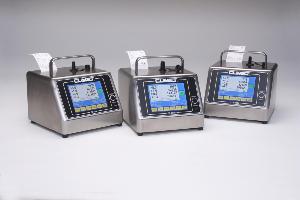
Climet enabled a particle counter to connect to a company network and load the user name and security level into the counter after the user was successfully authenticated by the network policies. This became the development of a custom program that is called the Climet User Authenticator. It works with CI-x5x counters with firmware version 3.60 or later.
The User Authenticator consists of two parts. A Supervisor program enables a supervisor to set up each particle counter user (analyst) according to his/her computer log in name. There is no practical limit to the number of users that can be set up. An encrypted file with the user names and security levels is stored on the network. The second part is the Workstation program. The analyst logs into a workstation that is connected to the network and runs the program. The program reads the log in name of the analyst. The particle counter is connected to the workstation. It detects the counter and reads the user name and security level of the analyst from the network and loads them onto the counter. The analyst then disconnects the counter and proceeds to take the samples for the controlled environment according to the SOP.
When the analyst has completed their rounds, they return to the workstation and run the program again. This time they use the program to transfer the records from the stored data memory to a folder on the network designated by the supervisor. The contents of the records are timestamped and contain the authenticated user name. Access to the folder is controlled by permissions established by the network policies. The data would then typically be transferred to a secure base such as a LIMS and archived.
Contact us today if you have similar requirements!